
Hospital Utilization Dashboard
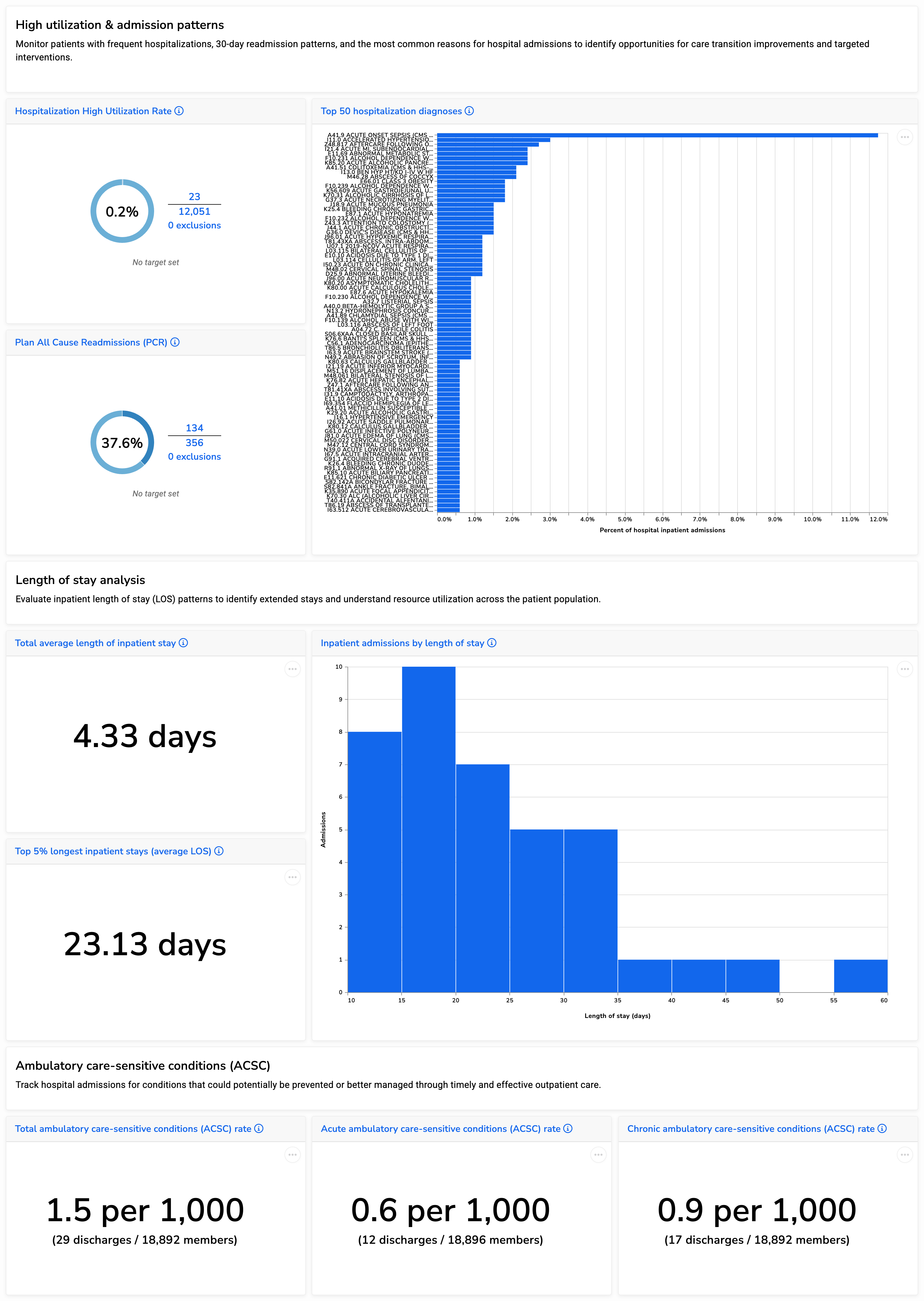
This dashboard helps you understand how patients in the latest roster are using hospital services. It’s a library dashboard, meaning you can use it as-is, or customize it to meet your health center’s needs.
Why rosters?
Rosters are used to represent a list of patients associated with a plan, program, or care initiative. These are generally not housed in the EHR, but imported from external sources.
This allows you to evaluate engagement and care utilization for a defined set of patients, including those who may not be fully represented in EHR data.
High utilization & admission patterns
Frequent hospitalizations and readmissions provide insight into how well patients are being supported across care settings.
Monitoring admission patterns helps health centers identify patients who may benefit from care management, transitional care programs, or closer outpatient follow-up after discharge. Over time, reductions in high utilization and readmissions can signal improved continuity of care and more effective intervention strategies.
Length of stay analysis
Longer inpatient stays may indicate more complex conditions, delays in discharge planning, or challenges coordinating post-acute care. Shorter stays, when appropriate, can suggest efficient care delivery and smoother transitions out of the hospital.
Looking at average length of stay alongside the longest stays helps identify outliers and investigate underlying causes. The overall distribution adds context, showing whether extended stays are isolated or part of a broader trend.
These insights can inform efforts to improve discharge planning, strengthen care transitions, and ensure patients are connected to appropriate follow-up care after leaving the hospital.
Ambulatory care-sensitive conditions (ACSC)
Ambulatory care-sensitive conditions (ACSC) highlight hospitalizations that may be preventable with timely and effective outpatient care. These include both chronic and acute conditions that, when well-managed, should not typically require inpatient admission. Elevated ACSC rates may point to gaps in access to primary care, care management, or patient engagement.
Over time, reductions in ACSC-related hospitalizations can indicate stronger outpatient care, better coordination, and improved population health management.