
Emergency Room Utilization Dashboard
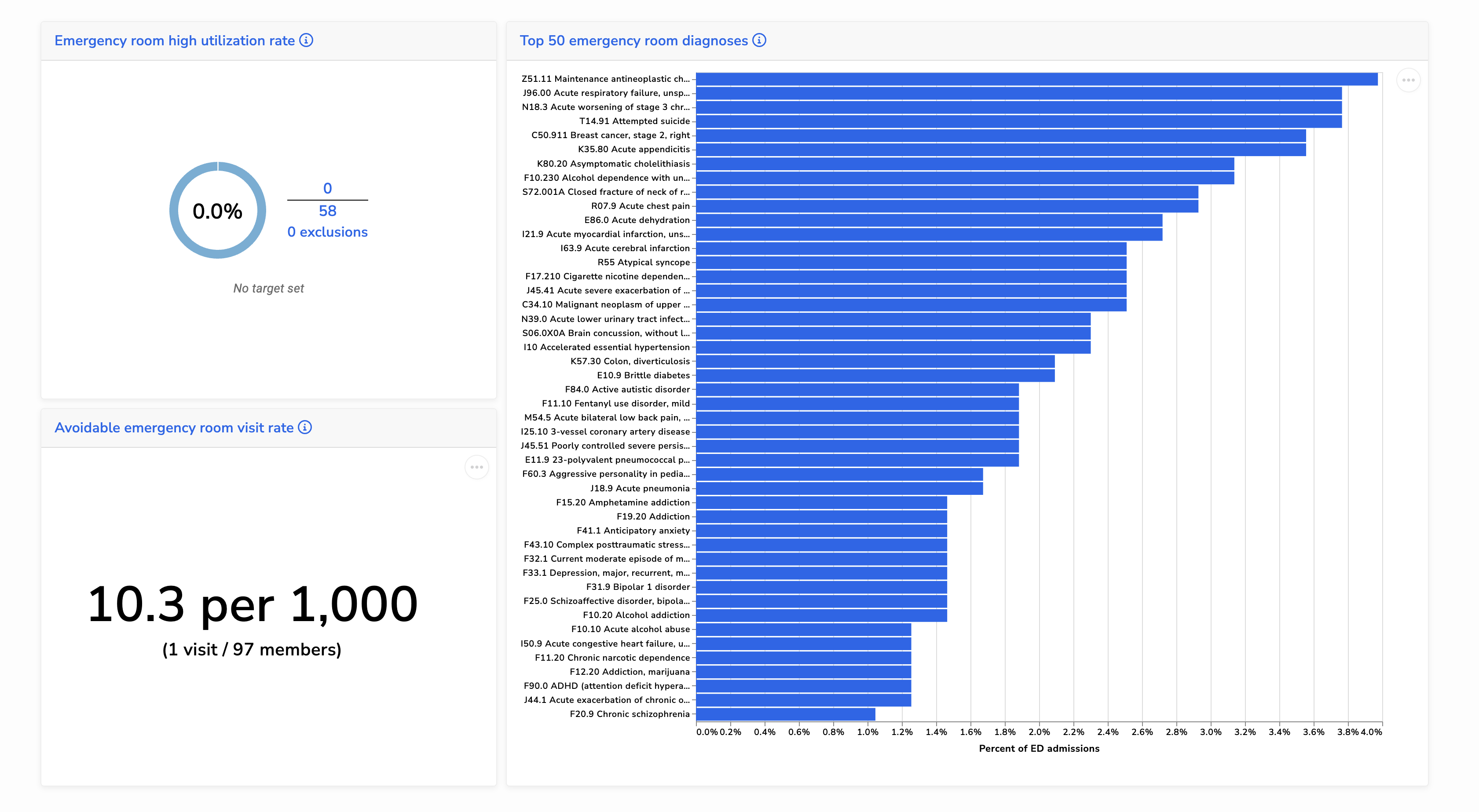
This dashboard helps you understand how patients in the latest roster are using emergency room services. It’s a library dashboard, meaning you can use it as-is, or customize it to meet your health center’s needs.
Why rosters?
Rosters are used to represent a list of patients associated with a plan, program, or care initiative. These are generally not housed in the EHR, but imported from external sources.
This allows you to evaluate engagement and care utilization for a defined set of patients, including those who may not be fully represented in EHR data.
Emergency room high utilization rate
High emergency room utilization often signals gaps in access to primary care, care coordination, or chronic disease management. Patients with frequent emergency room visits may have unmet clinical or social needs that are not being addressed in outpatient settings.
Tracking this rate helps health centers identify populations that would benefit from targeted interventions, such as care management enrollment, improved access to same-day visits, or outreach to address barriers like transportation or medication adherence. A rising rate may indicate increasing strain on outpatient access, while a declining rate can suggest that interventions are improving continuity of care.
Avoidable emergency room visit rate
Avoidable visits are an important signal of how well patients are able to access timely, appropriate care. High rates may indicate limited appointment availability, gaps in after-hours care, or a lack of patient awareness about where to seek care for non-emergent issues.
By monitoring this metric, health centers can evaluate whether access improvements, such as expanded hours, same-day scheduling, or patient education, are reducing unnecessary emergency room use. Over time, lowering avoidable visits can reduce costs, improve patient experience, and ensure emergency services are used for truly urgent needs.
Top 50 emergency room diagnoses
Understanding the most frequent reasons patients visit the emergency room can reveal patterns in unmet needs or gaps in ongoing care. For example, a high volume of visits related to chronic conditions may indicate opportunities for better disease management, while certain acute conditions may point to access or education gaps.
Health centers can use this information to prioritize interventions, such as targeted outreach, care management programs, or patient education initiatives. It can also help inform resource planning and partnerships aimed at addressing the underlying drivers of emergency room utilization.